
Design and build or design and tender, which is better?
Design and build puts design and construction under one contractor, so it is faster and easier to manage with a single point of accountability. Design and tender separates the two, giving more design control but longer timelines. Most Singapore office projects choose design and build for speed and cost certainty.
When you start planning an office renovation in Singapore, one of the first decisions you will make is how to procure the work. Most projects follow one of two routes: design and build, or design and tender. The choice affects your budget, your timeline, and how much control you have over the outcome. Getting this decision right before you commit saves significant time and money down the line.
Quick Answer: Design and build means one contractor handles both design and construction under a single contract, giving you speed, clearer accountability, and a fixed price early. Design and tender separates design (architect or ID firm) from construction (contractor you choose via tender), giving you more design control and competitive pricing but taking longer and splitting accountability across parties. For most Singapore office renovations under 5,000 sqft, design and build is faster and lower-risk.
What Design and Build Means
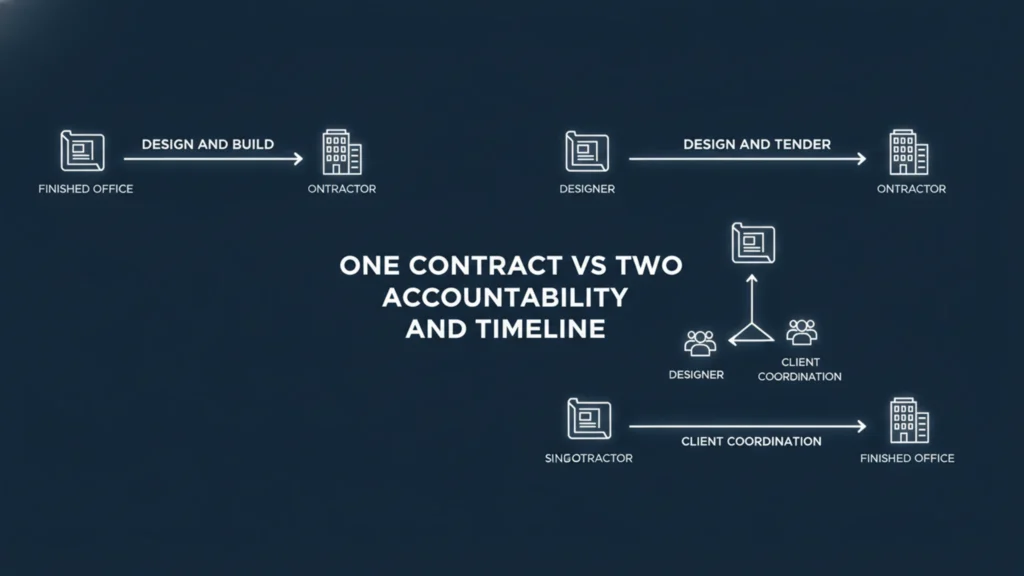
In a design and build contract, you engage a single firm to handle both the design and the physical construction of your office. There is one point of contact, one contract, and one party responsible if something goes wrong.
The contractor’s team typically includes or works closely with an in-house designer or interior design partner. Once you agree on the brief and the budget, the firm develops the design and moves into construction without you managing the handover between different parties.
The Building and Construction Authority of Singapore (BCA) recognises design and build as an established procurement method for commercial projects. It is widely used in Singapore for office fit-outs, retail renovations, and commercial tenancy works because of its speed and accountability benefits.
What Design and Tender Means
In a design and tender arrangement, the process is split into two distinct phases.
First, you hire a design professional separately — an architect, an interior design firm, or a specialist space planner. They produce a full set of drawings and specifications. Once those are complete, you put the project out to tender, inviting multiple contractors to price the work. You then select a contractor based on their quote and track record.
The design firm and the contractor are separate entities with separate contracts. You sit between them and coordinate when issues arise.
Comparing the Two Approaches
Cost
Design and build typically locks in a price earlier. The contractor knows both the design and the construction, so they can give you a firm quote before work begins. Budget overruns are less common because the same team is accountable for both.
Design and tender can sometimes result in lower construction costs if you get competitive quotes from multiple contractors. However, the overall project cost — including the design fee paid separately — is harder to predict, and variation orders are common when the construction team identifies gaps or conflicts in the drawings.
Timeline
Design and build is faster. Design and construction can overlap, and there is no gap between finalising drawings and starting on site. For most Singapore office renovations, this saves four to eight weeks compared to the full design-tender process.
Design and tender takes longer because the two phases must largely complete in sequence. You cannot tender to contractors until the design is substantially finished, and contractors need time to price accurately.
Accountability
This is where design and build has the clearest advantage. If the finished space does not match expectations, there is one party responsible. With design and tender, disputes between the designer and the contractor over who caused a problem are common and costly to resolve.
Design Control and Flexibility
Design and tender gives you more influence over the design outcome. You work directly with a dedicated designer whose sole job is to produce the best brief for your space, not to price and build it efficiently. If you have strong aesthetic requirements or a complex brief, this separation can produce a more refined result.
Design and build firms are experienced at delivering functional, well-finished spaces efficiently. Where design and tender may give you more creative latitude, design and build gives you a more predictable path from brief to finished office.
Which Projects Suit Each Route
Design and build works well when:
- You have a firm completion deadline (new lease start date, business opening, staff move-in)
- Your budget is fixed and you want a locked-in price before work begins
- The space is a standard office fit-out: workstations, meeting rooms, pantry, reception
- You want one point of contact throughout the project
- You have limited in-house capacity to manage multiple contractors and consultants
Design and tender works well when:
- The project is complex or technically demanding (heritage building, large floorplate, unusual structural requirements)
- You have strong design preferences and want an independent designer to develop them fully before pricing
- You are open to a longer process in exchange for more competitive construction pricing
- Your organisation requires competitive tendering for governance or procurement policy reasons
For a detailed look at what drives cost per square foot and how to budget accurately, our guide on office renovation costs in Singapore breaks down the key variables.
MEP, Fire Safety, and Compliance
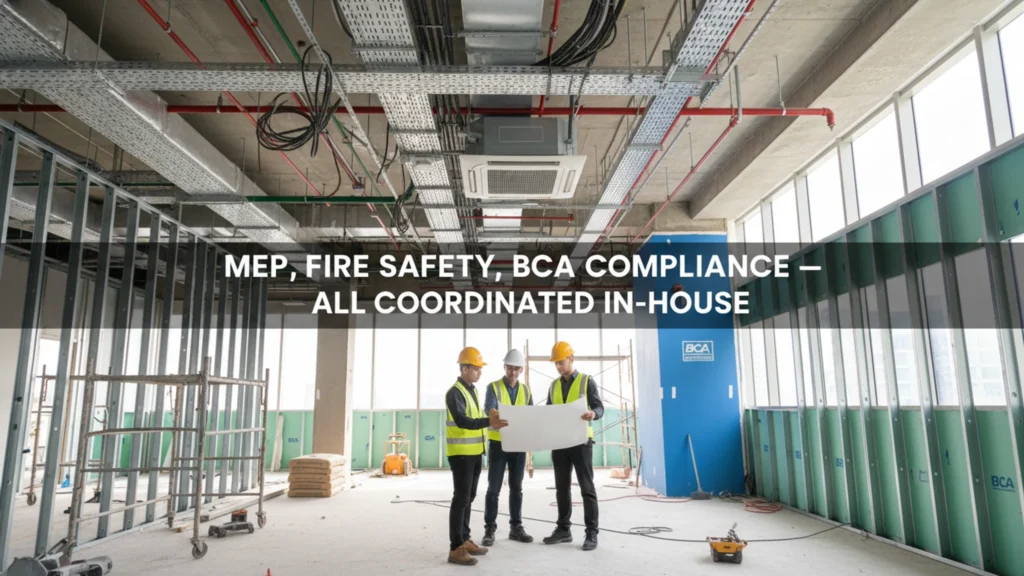
Regardless of which route you choose, your Singapore office renovation must meet BCA requirements and fire safety codes. MEP (mechanical, electrical, plumbing) planning, fire suppression systems, and air-conditioning zoning all need to be factored into the brief from the start — not added as afterthoughts.
In a design and build contract, this coordination happens internally. The same team that designs the space also coordinates the M&E trades. In a design and tender project, the designer and the M&E subcontractors may not align until late in the process, which creates risk.
Our article on commercial office fit-out planning in Singapore covers pantry specs, fire safety requirements, and MEP planning in detail.
How MD Interior Approaches Design and Build
MD Interior is a Singapore-based design and build contractor specialising in commercial office renovations. As a single-contract provider, they manage design, procurement, and construction in-house — which means tighter project timelines and clearer accountability for the client.
The team works from a detailed brief developed with the client before any drawings begin. Cost estimates are provided early, and the design is developed within the agreed budget rather than priced after the fact. This approach removes the most common source of cost blowouts in office renovation projects.
If you are evaluating contractors for an upcoming renovation, our overview of commercial renovation contractors in Singapore outlines what to look for and how to compare proposals.
Making the Decision
The right procurement route depends on your priorities. If speed, budget certainty, and a single point of accountability matter most, design and build is the right fit for most Singapore office renovations. If you have complex requirements, strong design preferences, or a governance requirement for competitive tendering, design and tender may be worth the extra time and coordination.
Either way, starting with a clear brief — space requirements, budget ceiling, and completion date — gives any contractor or designer the information they need to deliver a result that works for your business.
Frequently Asked Questions
Q: Is design and build more expensive than design and tender in Singapore?
Not necessarily. Design and build tends to produce more accurate upfront quotes because the same team handles both phases. Design and tender can yield lower construction costs if you get competitive bids, but design fees are paid separately and variation orders are more common. The total project cost is often comparable — the main difference is when and how cost certainty is established.
Q: How long does a typical office renovation take in Singapore using design and build?
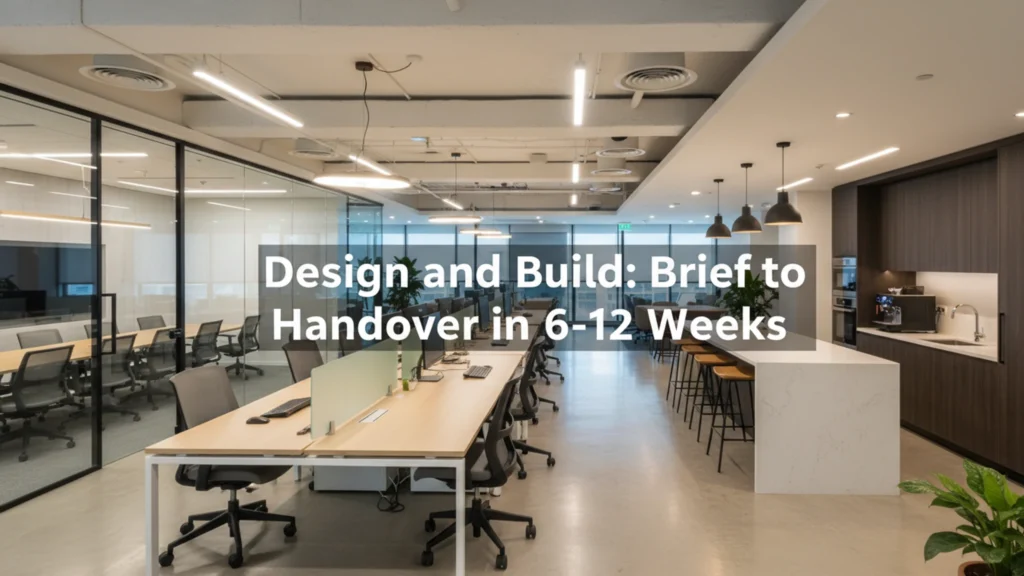
For a standard office fit-out in Singapore, design and build typically takes six to twelve weeks from brief approval to handover, depending on the floor area and complexity. This includes design development, permit applications, and construction. Design and tender projects typically add four to eight weeks for the separate tender process.
Q: Do I still need to submit plans to BCA or the relevant authority with design and build?
Yes. Renovation works in Singapore that involve structural changes, fire safety systems, or M&E modifications still require the appropriate approvals from BCA, FSSD, or other authorities depending on the scope. A reputable design and build contractor handles these submissions as part of their service. Always confirm this is included in the contract scope before signing.
Q: What should I prepare before meeting a design and build contractor?
Come with a rough floor plan or the tenancy square footage, your target completion date, and a realistic budget range. If you have reference images of office styles you like, bring those too. The more specific you can be about how your team works — open plan vs private offices, number of meeting rooms, storage needs — the more accurate the contractor’s preliminary estimate will be.
Q: Can I make design changes once construction has started in a design and build project?
Changes are possible but come at a cost, like any renovation project. Design and build contracts typically handle variations through a formal change order process with an agreed price before the work proceeds. The key advantage is that one party owns both the design and the construction, so changes are processed faster than in a design and tender arrangement where designer and contractor must both be consulted.