
One wrong assumption can turn a “simple refresh” into a budget fire drill. In Singapore, office renovation costs jump fast when approvals, fire safety, building management rules, and last minute changes collide. We see this most often when teams pick a contractor first, then discover the building and compliance requirements later.
Below are the cost mistakes that burn SMEs most often, plus the practical fixes we use on real office projects.
Mistake 1. Underestimating compliance and submission costs
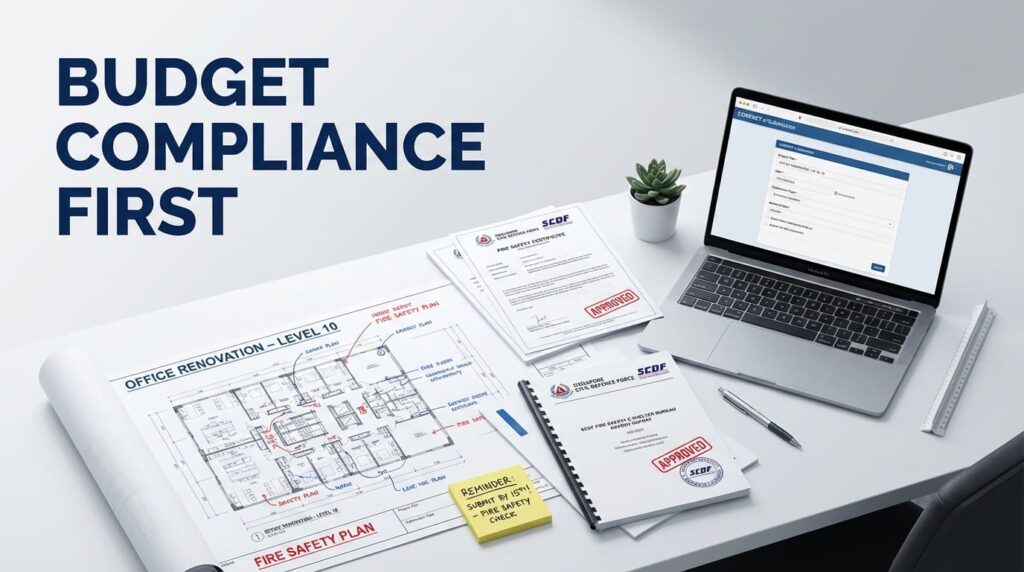
In Singapore, a layout change is rarely “just move a wall.” The moment your works touch escape routes, sprinklers, smoke control, or fire protection plans, you are in plan submission territory. SCDF requires plan approval for proposed fire safety works, and submissions are made through the CORENET e Submission system by qualified persons.
[Answer Capsule] The safest way to avoid compliance cost blowouts is to lock your layout early, appoint a Qualified Person early, and treat SCDF plan fees as a line item from day one. For many offices, SCDF plan fees alone can be charged per 100 square metres and per storey. Budget it before you sign. ([Default][1])
The cost trap most teams miss
SCDF publishes plan fees, including S$160 per 100 square metres for new fire safety works that contain prescribed fire safety measures, and S$90 per storey for certain amendments and additions or alterations. ([
Then there are building plan processing fees. BCA’s plan fee circular shows rates such as S$300 per 100 m2 above sublevel for the first 2,500 m2 for general buildings (non type 1), with other rates for below sublevel areas.
If you only budget “construction works” and ignore these, your cost plan is already wrong.
Actionable takeaways
- Build a one page “submission map” before design starts. Include SCDF, building plan items, and any landlord or building management approvals.
- Freeze your floor plan before submissions. Late layout changes are the most common reason plans get revised and re costed.
- Use CORENET workflow thinking. Plan submissions are a process with dependencies, not a single form. ([info.corenet.gov.sg][2])
Mistake 2. Believing “cheap quote” means “cheaper project”
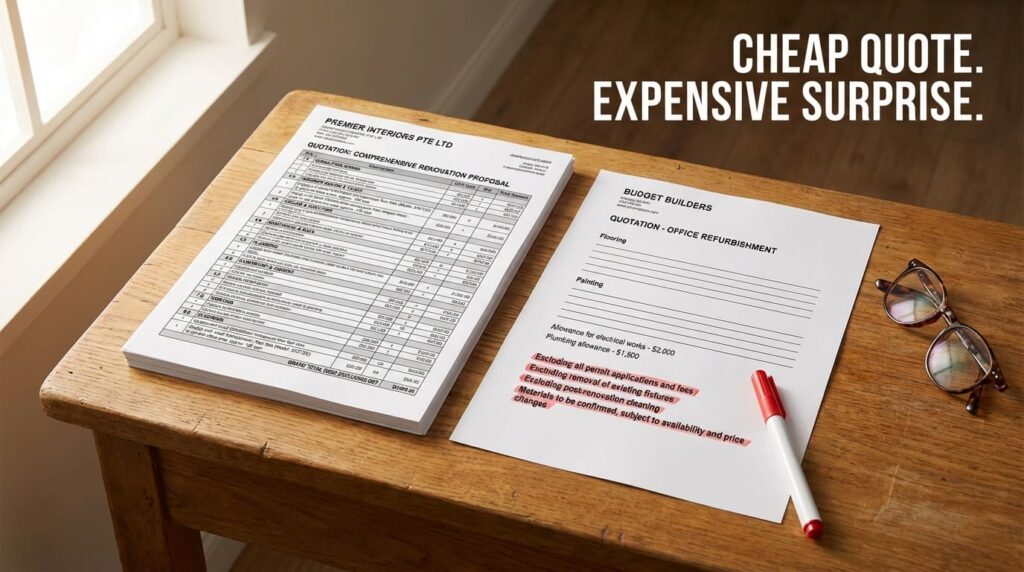
If a quote is much lower than the rest, it is usually missing scope, using vague allowances, or excluding things you will definitely need.
A very Singapore problem is quote shock. People come in with a budget range, then get a number far above it. You see this pattern even in local forums. One AskSingapore thread shows a homeowner saying their budget was S$30k to S$40k but the quote came back at S$54k. The same logic applies in offices when scope is unclear or under specified.
What we look for in a risky quote
- “Supply and install” with no brand, model, thickness, or fire rating stated.
- Electrical and data points listed as a small fixed allowance with no schedule.
- “Excluding” notes that remove disposal, protection, after hours works, testing, or reinstatement.
Actionable takeaways
- Ask for an itemised scope list. If the contractor cannot itemise, you cannot control variation.
- Compare three quotes using the same scope checklist. Do not compare based on a single grand total.
- Make sure fire safety related items are explicit, not implied. SCDF plan approval and fees are specific and published.
Mistake 3. Skipping contingency in a humid, high wear environment
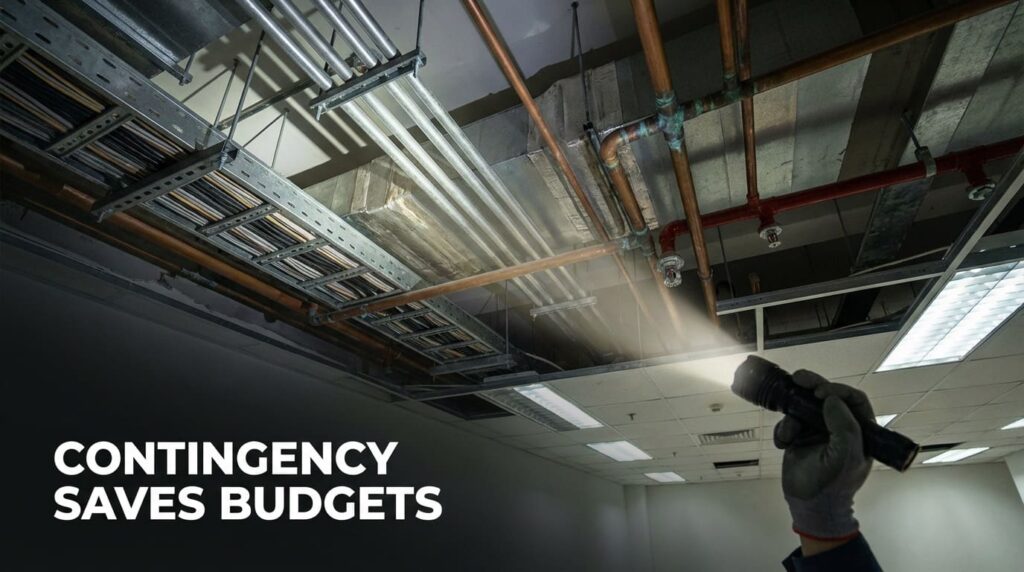
Singapore offices hide problems until work starts. Old cabling paths, leaking condensate, uneven slabs, and surprise mechanical ventilation constraints show up only after opening ceilings or flooring.
A sensible contingency for many projects commonly sits in the 5 percent to 15 percent range depending on complexity and risk.
What contingency is for
Contingency is not “extra money to spend.” It is budget protection for unknowns you cannot verify without opening up the space.
Actionable takeaways
- Set a contingency line item from day one. For older buildings or heavy M and E changes, place it closer to the higher end of the range.
- Release contingency only when risk is retired. Example. After ceiling open up confirms services routes and capacity.
Mistake 4. Designing first, then asking “can we actually build this here”
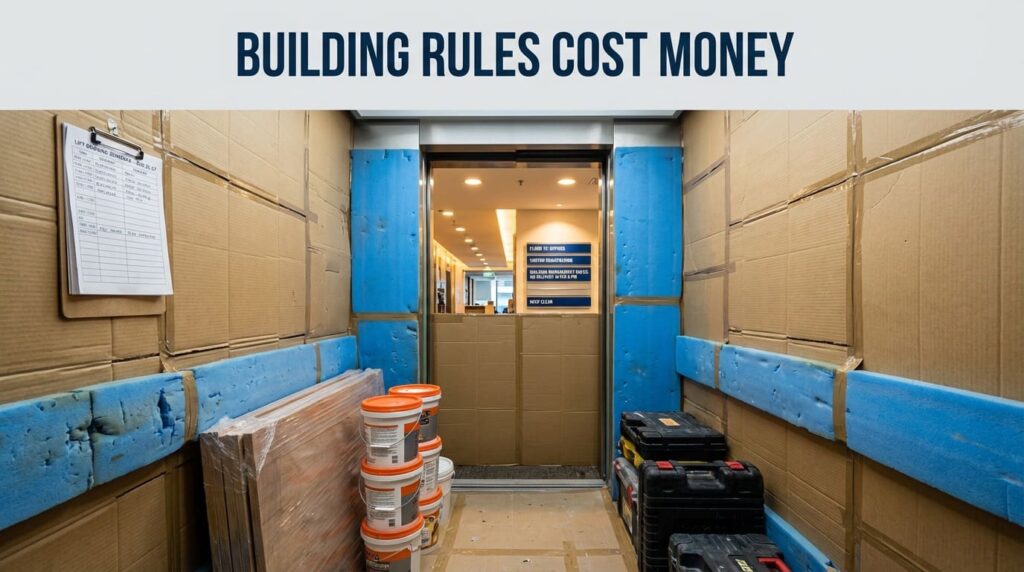
This is where MCST rules, landlord guidelines, and building restrictions hit you. Even if your office is not a condo unit, many commercial buildings run similar management processes. You can be forced into extra requirements like service lift bookings, protection padding, restricted work hours, and deposits.
In local discussions, people regularly mention management approval and deposits as a practical reality, and that ignoring these rules can trigger escalation.
The cost impact
- Night works premiums if the building restricts noisy works to non peak hours.
- Extra logistics costs if loading bays have booking windows.
- Delays that spill into rent overlap because your move date slips.
Actionable takeaways
- Treat building management clearance as a permit. Get the rules pack before you finalise design.
- Include logistics and protection costs in the first cost plan. Do not leave it as “later.”
Mistake 5. Late changes that trigger rework and variation orders
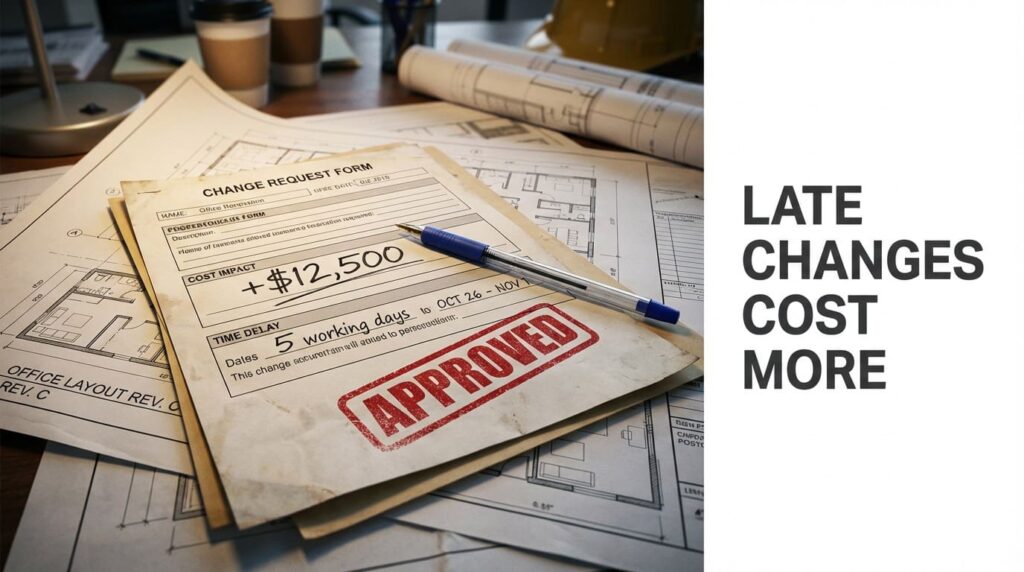
Every late change is a multiplier. A simple partition change can force changes in electrical, sprinklers, ceiling, and even fire safety drawings. Changes are also a known driver of budget growth in construction research.
A PMI published paper cites a mean cost overrun figure of 2.95 percent in one study context, and also notes that changes can contribute to cost increases. The key point for office projects is that changes are not free, and they cluster.
Actionable takeaways
- Lock the layout and workstation plan before M and E coordination.
- Use a strict change control rule. Any change after sign off must include a time impact and cost impact in writing.
- Prioritise decisions that affect approvals first. Fire safety related changes can be expensive because they may require revisions and resubmissions. ([Default][1])
Mistake 6. Under scoping IT, power, and mechanical ventilation
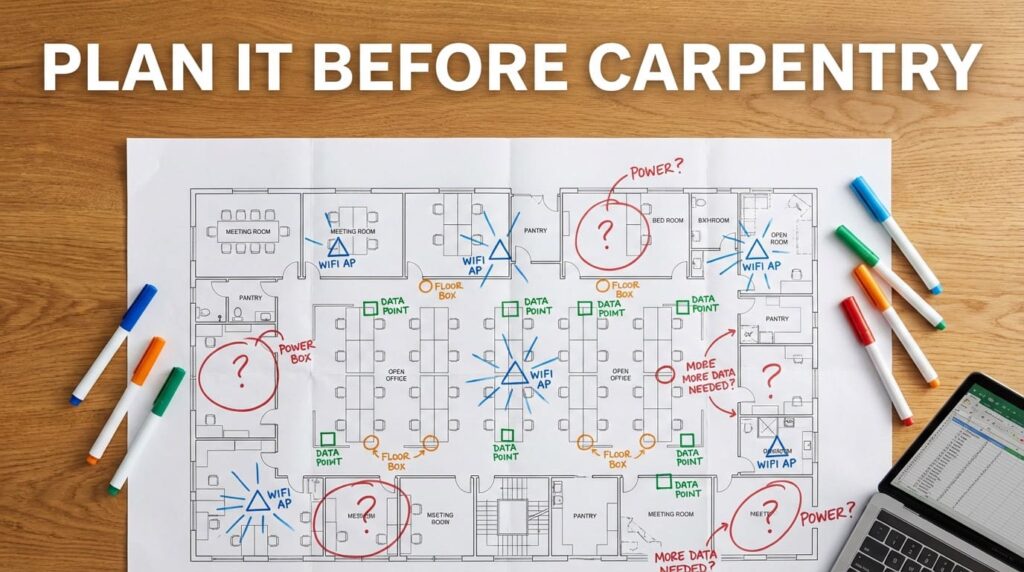
SMEs often underbudget what employees actually use. Meeting rooms need stable connectivity. Open plan offices need enough power and data points. Singapore heat and humidity mean cooling and ventilation performance is not optional for comfort or productivity.
This becomes a cost mistake when teams buy furniture first, then realise they need more floor boxes, power points, or network drops. That is usually a variation.
Actionable takeaways
- Do a one day “day in the life” audit. Count devices, meeting rooms, and peak occupancy usage.
- Confirm air distribution and returns early. If the design changes partitions, you may need M and E adjustments and possibly plan updates depending on scope.
Mistake 7. Cutting corners on furniture and ergonomics, then paying twice
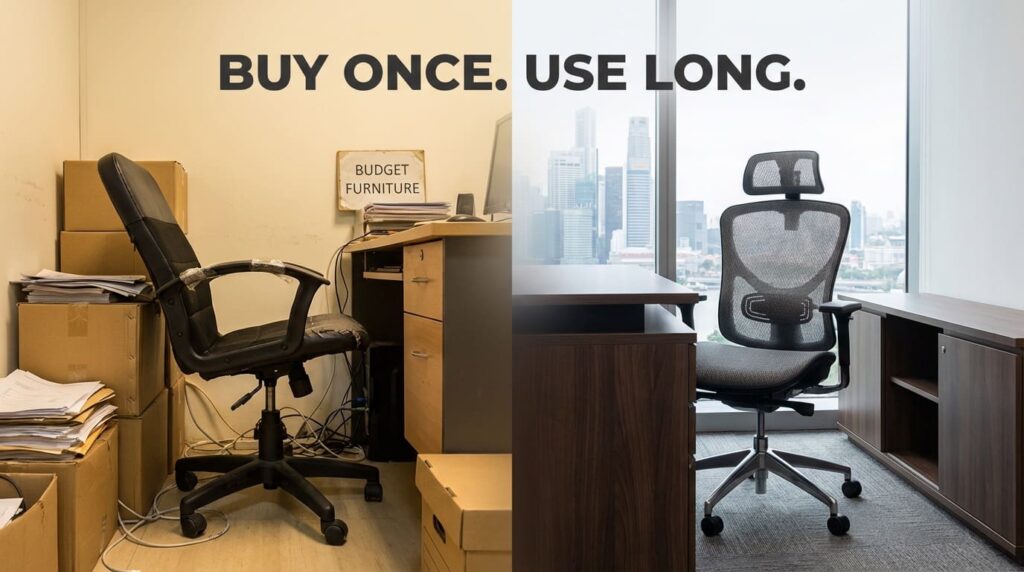
Cheap furniture is not always cheap. When desks wobble, chairs fail, or storage is insufficient, the “fix” is often replacement while the office is already operating. That creates a second wave of costs, plus downtime.
Reddit threads on renovation regrets frequently mention “hiring cheap” and then living with quality issues and replacement costs later. Different context, same lesson. ([Reddit][6])
Actionable takeaways
- Budget furniture as part of the whole office cost plan, not as an afterthought.
- Match furniture to job roles. Call centre seating is not the same as director chairs.
- Treat storage as a cost control tool. When storage is missing, teams add ad hoc cabinets later, and layout efficiency drops.
A simple cost control checklist before you sign anything
Use this as a fast sanity check.
- Do you have a submission plan for SCDF and any building plan items, and did you budget the published plan fees. ([Default][1])
- Do you have building management rules in writing, including work hours, lift bookings, protection, and deposits. ([Reddit][5])
- Is your quote itemised with clear inclusions and exclusions.
- Is contingency included and protected. ([Mastt][4])
- Is there a written change control rule with cost and time impacts.
If you want MD Interior to review your scope and help you avoid the usual traps, start with our Office Renovation page and our Services overview. ([mdinterior.com.sg][7]) When you are ready, contact us here. Contact MD Interior. ([mdinterior.com.sg][8])
FAQ. Office renovation cost mistakes in Singapore
How do I know if my renovation needs SCDF submission
If your works involve fire safety measures, fire protection, mechanical ventilation for smoke control, or changes that affect fire safety plans, SCDF plan approval may apply and submissions are made via CORENET by a qualified person. Start by checking SCDF plan approval guidance and plan fee categories.
What are SCDF plan fees like
SCDF lists plan fees such as S$160 per 100 square metres for certain new fire safety works with prescribed fire safety measures, and S$90 per storey for some amendments and additions or alterations.
Why do office renovation quotes vary so much in Singapore
Most big gaps come from scope differences and exclusions. One quote includes protection, night works, testing, and coordination. Another leaves them out. Quote shock stories are common in local forums.
What contingency should I set for an office renovation
For many projects, a common range is 5 percent to 15 percent, adjusted based on complexity and unknowns. Older buildings and heavier M and E changes tend to justify more.
What is the fastest way to cut cost without regret
Cut finishes, not compliance and not infrastructure. Keep the layout efficient, reduce feature walls, and standardise joinery. Do not gamble on fire safety scope or building management rules, because rework and delays cost far more later.
Want a second set of eyes before you sign?
If you’re planning an office refresh or full fit-out in Singapore, we can do a quick scope + quote sanity check to help you spot hidden exclusions, compliance costs, and “late-change” risks before they hit your budget.
- Review your existing layout + intended changes
- Flag common cost traps (SCDF / building management / M&E coordination)
- Suggest cost-control tweaks that don’t compromise compliance
Explore: Office Renovation
See: Services
Reach us: Contact MD Interior