
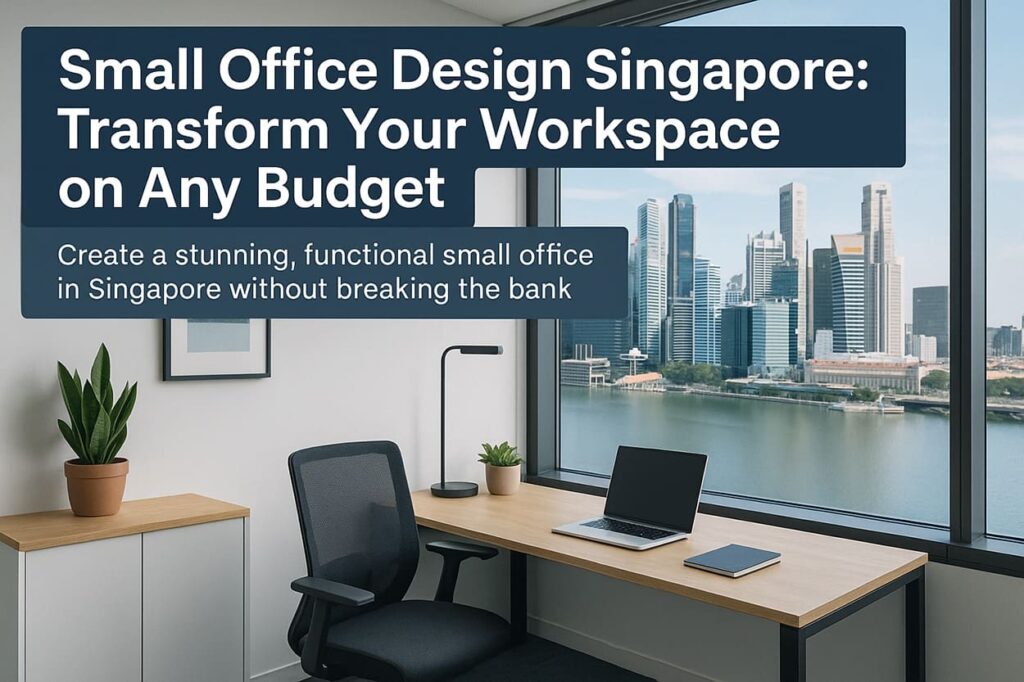
Create a stunning, functional small office in Singapore without breaking the bank – discover expert tips, local insights, and budget-friendly solutions that maximize every square foot.
Welcome to the ultimate guide for small office design in Singapore! As Singapore’s business landscape continues to evolve, with over 99% of enterprises being SMBs, creating an efficient and inspiring workspace within limited square footage has become more crucial than ever. Whether you’re a startup in Raffles Place, a growing agency in Tanjong Pagar, or a home-based business transitioning to your first commercial space, this comprehensive guide will show you how to transform your small office into a productivity powerhouse without exceeding your budget.
In this post, you’ll discover proven strategies used by Singapore’s top interior designers, local market insights, cost-effective solutions, and real-world examples that demonstrate how smart design can make even the smallest spaces feel expansive and professional.
Understanding Small Office Design Challenges in Singapore
Space Constraints in Singapore’s Premium Real Estate Market
Singapore’s premium commercial real estate market presents unique challenges for small businesses. With commercial rents averaging SGD $3-8 per square foot in the CBD and SGD $1.50-4 in suburban areas, every square foot counts. The typical small office in Singapore ranges from 200-800 square feet, requiring strategic design approaches to maximize functionality.
Climate Considerations for Singapore Offices
Singapore’s tropical climate demands specific design considerations that impact both comfort and costs. High humidity levels require proper ventilation planning, while the need for consistent air conditioning affects space layout and energy efficiency. Smart design choices can reduce cooling costs by up to 30% through strategic placement of workstations away from heat sources and maximizing natural light while minimizing direct sunlight.
Local Building Regulations and HDB Guidelines
Understanding Singapore’s building codes is essential for small office renovations. The Building and Construction Authority (BCA) has specific requirements for commercial spaces, including fire safety regulations that may impact layout options. For businesses operating from HDB commercial units, additional guidelines apply regarding noise levels and operating hours.
Budget-Friendly Design Strategies That Work
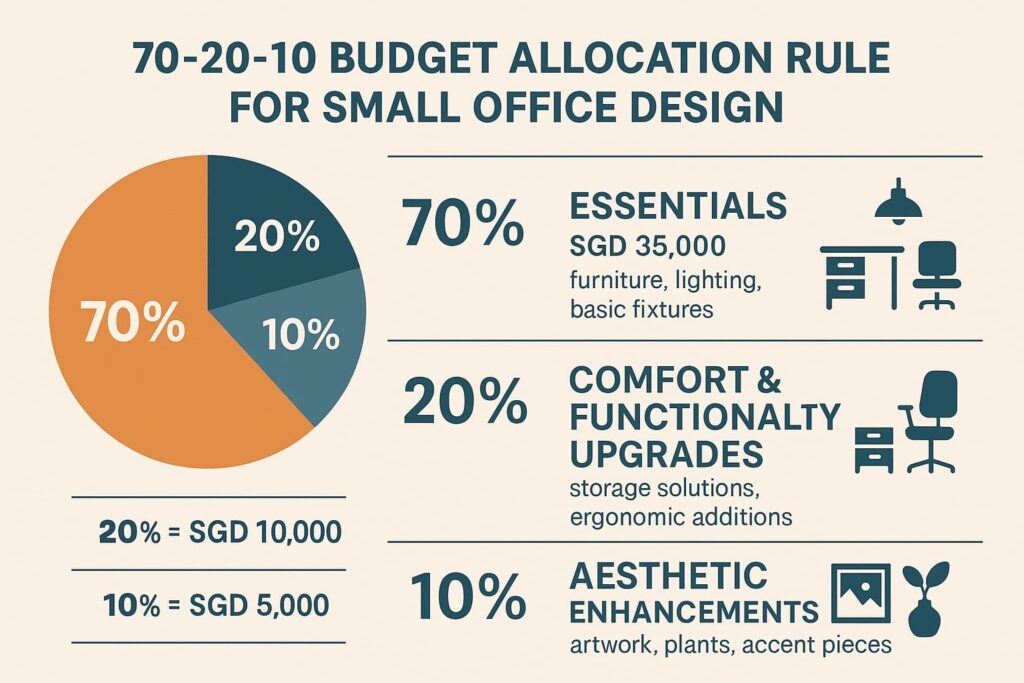
The 70-20-10 Rule for Small Office Budgets
Professional interior designers in Singapore recommend allocating your budget using the 70-20-10 rule: 70% for essentials (furniture, lighting, basic fixtures), 20% for comfort and functionality upgrades (storage solutions, ergonomic additions), and 10% for aesthetic enhancements (artwork, plants, accent pieces).
Smart Shopping Strategies for Singapore
Singapore offers numerous cost-effective shopping options for office furniture and décor. Megafurniture and IKEA provide budget-friendly basics, while Hock Siong & Company offers quality second-hand office furniture. For unique pieces, explore Sungei Road Thieves Market (weekends) or online platforms like Carousell for pre-loved office items.
DIY Solutions vs. Professional Services
Understanding when to DIY and when to hire professionals can save significant costs. Simple tasks like painting, basic shelf installation, and décor placement are perfect for DIY. However, electrical work, built-in storage solutions, and space planning require professional expertise to ensure safety and maximize efficiency.
Space Planning Essentials for Maximum Efficiency
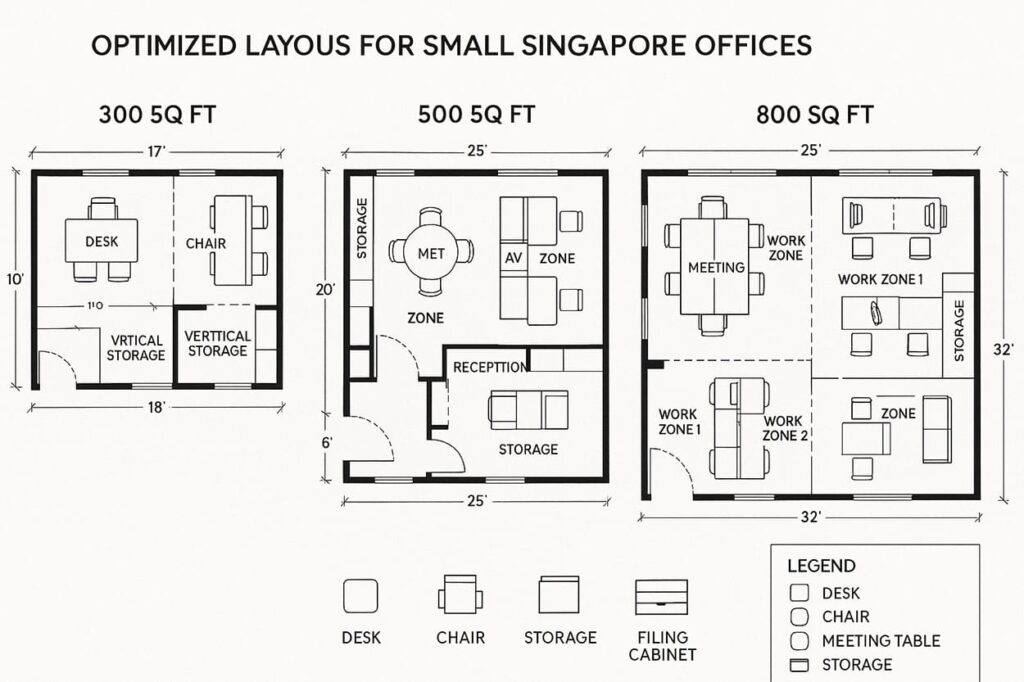
The Science of Small Space Layout
Effective small office layout follows the 60-30-10 spatial distribution: 60% for primary work areas, 30% for circulation and secondary functions, and 10% for storage and utilities. This ratio ensures optimal workflow while preventing the space from feeling cramped.
Multi-Functional Furniture Solutions
In Singapore’s compact offices, every piece of furniture should serve multiple purposes. Consider desks with built-in storage, ottomans that double as filing cabinets, and modular shelving systems that can be reconfigured as needs change. Local furniture makers like Castlery and Commune offer customizable solutions perfect for Singapore’s space constraints.
Creating Zones in Open Spaces
Even in a 300-square-foot office, you can create distinct zones using furniture placement, lighting, and visual cues. Designate areas for focused work, collaboration, and relaxation/break time. Room dividers made from plants, screens, or bookcases can create privacy without permanently altering the space.
Color Psychology and Visual Expansion Techniques
Singapore-Appropriate Color Schemes
Singapore’s intense natural light allows for both bold and subtle color choices. Light colors like whites, soft grays, and pastels reflect light and make spaces appear larger. However, don’t shy away from accent colors – a feature wall in Singapore’s national colors (red and white) or calming blues and greens can add personality without overwhelming the space.
Mirror Placement and Lighting Strategies
Strategic mirror placement can double the visual space of your office. Position mirrors to reflect natural light from windows or opposite attractive features like plants or artwork. Avoid placing mirrors directly across from cluttered areas, as this will amplify the chaos rather than create calm.
Using Vertical Space Effectively
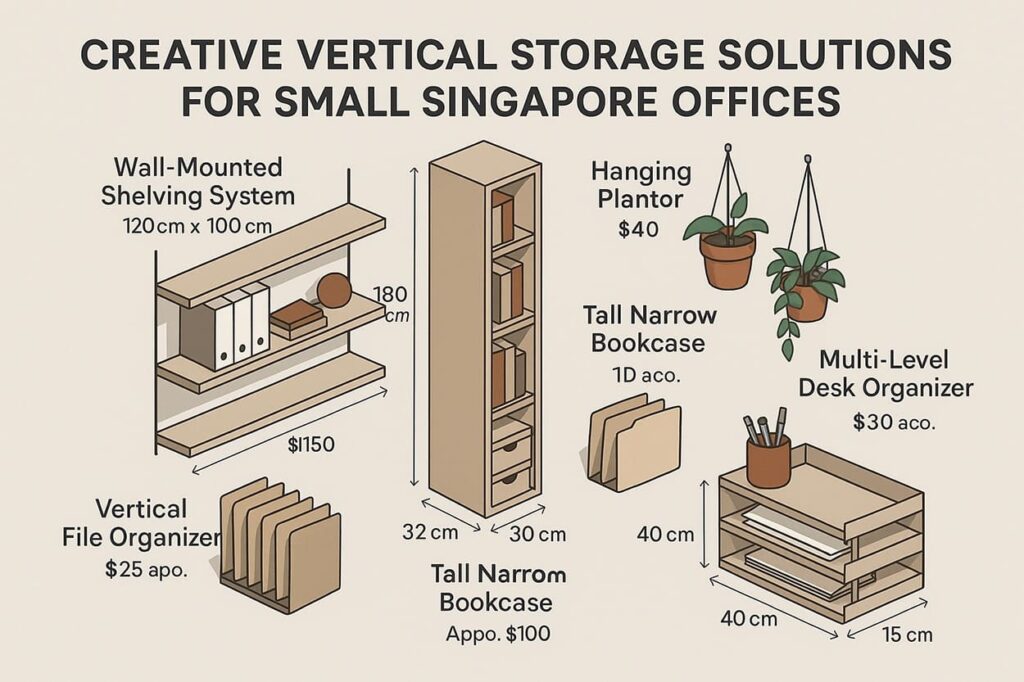
Singapore offices often have higher ceilings than expected. Utilize this vertical space with tall, narrow shelving units, hanging planters, or wall-mounted storage systems. Draw the eye upward with vertical artwork or striped wallpaper to create the illusion of even more height.
Essential Design Elements for Singapore Offices
Lighting Solutions for Tropical Environments
Singapore’s consistent daylight hours (approximately 12 hours year-round) provide excellent natural light opportunities. Position workstations to maximize natural light while avoiding glare. Supplement with LED task lighting and ambient lighting for early morning or evening work. Consider smart lighting systems that adjust throughout the day to maintain productivity.
Climate-Conscious Material Choices
Singapore’s humidity requires materials that resist moisture and maintain their appearance. Opt for laminated surfaces over solid wood, metal fixtures over fabric where possible, and ensure proper ventilation around upholstered furniture. Local suppliers like Hafary and Goodrich Global offer humidity-resistant materials specifically designed for Singapore’s climate.
Technology Integration
Modern Singapore offices require seamless technology integration. Plan for adequate power outlets (Singapore uses Type G plugs), ensure strong Wi-Fi coverage throughout the space, and consider cable management solutions that keep the space looking clean and professional.
Local Singapore Examples and Case Studies
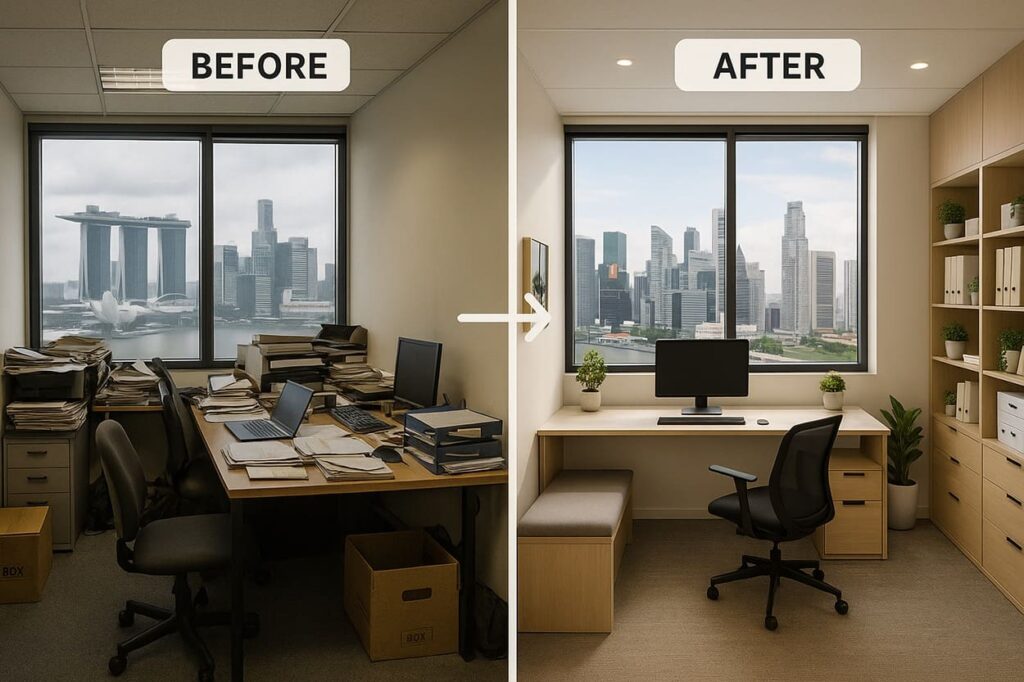
Successful Small Office Transformations
Case Study 1: Startup in Chinatown A 400-square-foot tech startup in Chinatown transformed their space using a S$8,000 budget. By incorporating built-in desks along the perimeter, vertical storage solutions, and a central collaboration table that doubles as a ping-pong table, they created a dynamic workspace that supports both focused work and team building.
Case Study 2: Creative Agency in Tiong Bahru A boutique design agency in Tiong Bahru maximized their 350-square-foot space by embracing Singapore’s shophouse architecture. They exposed original brick walls (with proper treatment for humidity), installed floating desks that don’t obstruct the architectural features, and used a neutral color palette that highlights the space’s character.
Neighborhood-Specific Design Considerations
Central Business District (CBD) CBD offices often feature floor-to-ceiling windows and modern building amenities. Design around these assets by choosing furniture that doesn’t compete with city views and taking advantage of building services like shared meeting rooms and roof terraces.
Suburban Commercial Centers Suburban offices like those in Ang Mo Kio or Jurong East typically offer larger spaces at lower costs but may lack natural architectural interest. Focus on creating visual interest through color, texture, and strategic lighting.
Statistics and Market Insights
| Metric | Singapore Data | Impact on Design |
|---|---|---|
| Average small office size | 200-800 sq ft | Requires multi-functional furniture |
| Commercial rent (CBD) | SGD $3-8 per sq ft | Maximizing efficiency is crucial |
| SMB percentage of all enterprises | 99% | High demand for cost-effective solutions |
| Average renovation budget | SGD $80-150 per sq ft | Smart budget allocation essential |
| Energy cost savings with good design | Up to 30% | Climate-conscious design pays off |
| Productivity increase with optimized space | 15-25% | ROI on design investment |
Sources: Urban Redevelopment Authority Singapore, Department of Statistics Singapore
Professional vs. DIY: When to Call the Experts
DIY-Friendly Projects
- Painting and simple wall treatments
- Installing floating shelves and basic storage
- Arranging furniture and creating zones
- Adding plants and decorative elements
- Basic lighting fixture replacement
Professional Services Worth the Investment
- Space planning and layout optimization
- Electrical work and smart lighting systems
- Built-in storage solutions
- Structural modifications
- Climate control optimization
For professional small office design services in Singapore, consider working with experienced firms like MD Interior who specialize in maximizing small commercial spaces within budget constraints.
Sustainability and Future-Proofing Your Design
Singapore’s Green Building Standards
Singapore’s commitment to sustainability, reflected in the Green Building Masterplan, offers opportunities for small businesses to reduce costs while contributing to environmental goals. Choose energy-efficient lighting, sustainable materials, and designs that adapt to changing needs rather than requiring complete overhauls.
Flexible Design for Growth
Design your small office with growth in mind. Choose modular furniture systems that can be reconfigured, avoid permanent built-ins that can’t be moved, and select technology solutions that scale with your business. This approach saves money in the long run and reduces disruption during expansion.
Common Mistakes to Avoid
Over-Furnishing Small Spaces
The most common mistake in small office design is cramming too much furniture into the space. Follow the less is more
principle – choose fewer, higher-quality pieces that serve multiple functions rather than many single-purpose items.
Ignoring Singapore’s Climate
Failing to account for humidity and heat when choosing materials and layouts can lead to costly replacements and uncomfortable working conditions. Always prioritize climate-appropriate solutions.
Neglecting Storage Needs
Underestimating storage requirements leads to cluttered, inefficient workspaces. Plan for 20-30% more storage than you think you need, utilizing vertical space and hidden storage solutions.
Getting Started: Your Action Plan
Phase 1: Assessment and Planning (Week 1)
- Measure your space accurately
- List your must-have vs. nice-to-have requirements
- Set a realistic budget using the 70-20-10 rule
- Research Singapore building regulations for your location
Phase 2: Design and Procurement (Weeks 2-4)
- Create a detailed floor plan
- Source furniture and materials from local suppliers
- Order custom elements (these typically take 4-6 weeks in Singapore)
- Arrange professional services if needed
Phase 3: Implementation (Weeks 5-6)
- Complete any professional installations first
- Arrange furniture and basic setup
- Add finishing touches and organizational systems
- Test all technology and lighting systems
Frequently Asked Questions
Q: What’s the typical cost for small office interior design in Singapore? A: Small office design typically costs SGD $80-150 per square foot, depending on complexity and finishes. A 400-square-foot office might require S$32,000-60,000 for a complete renovation, though many effective improvements can be made for S$10,000-20,000.
Q: How long does a small office renovation take in Singapore? A: Simple refreshes can be completed in 1-2 weeks, while comprehensive renovations typically take 4-8 weeks, including planning, procurement, and installation. Factor in additional time for permit approvals if structural changes are involved.
Q: Can I renovate my HDB commercial unit for office use? A: Yes, but you must comply with HDB guidelines regarding noise levels, operating hours, and modifications. Check with HDB before making structural changes, and ensure your business activities are permitted in commercial HDB spaces.
Q: What are the best local suppliers for office furniture in Singapore? A: Popular options include IKEA and Megafurniture for budget-friendly basics, Castlery and Commune for mid-range custom solutions, and Herman Miller or Steelcase dealers for premium ergonomic furniture. For budget options, explore Hock Siong & Company for quality used furniture.
Q: How can I make my small office look larger? A: Use light colors, strategic mirror placement, vertical storage solutions, and multi-functional furniture. Ensure good lighting, minimize clutter, and create clear sightlines through the space. Consider glass partitions instead of solid walls if privacy is needed.
Conclusion: Transform Your Small Office Today
Creating an exceptional small office in Singapore doesn’t require an unlimited budget – it requires smart planning, local market knowledge, and strategic design choices. By focusing on multi-functional furniture, climate-appropriate materials, and efficient space planning, you can create a workspace that rivals much larger offices in both functionality and style.
Remember that great design is an investment in your business’s success. A well-designed office can increase productivity by up to 25%, improve employee satisfaction, and create a professional impression that supports business growth. Whether you’re working with a S$5,000 budget or S$50,000, the principles outlined in this guide will help you maximize every dollar spent.
Ready to transform your small office space? Start with a clear assessment of your needs, create a realistic budget, and don’t hesitate to consult with professionals for complex elements. For expert guidance on small office design in Singapore, consider partnering with specialists like MD Interior who understand the unique challenges and opportunities of Singapore’s commercial real estate market.
Your dream office is closer than you think – with the right approach, even the smallest Singapore office can become a powerful engine for business success.
Useful Resources
- Building and Construction Authority Singapore – Building regulations and permits
- Urban Redevelopment Authority – Zoning and commercial space guidelines
- MD Interior’s Office Design Portfolio – Local expertise and inspiration